On this Halloween of 2026, I wanted to share a story about what I consider to be the birth of the modern Haunted House industry. This story goes back over 56 years to a young man who most have never heard of. His name is Jimmy Turner. For perspective, this all goes back to 1970…
One year after Disneyland opened the Haunted Mansion (1969);
Years before Reindeer Manor opened in Red Oak Texas (1974);
Five years before The Edge of Hell opened in Kansas City (1975) …
Eighteen years before Hangman’s House of Horrors opened in Fort Worth (1988);
Twenty-two years before Fright Fest opened at Six Flags over Texas (1992);
Decades before The Tower of Terror opened at Disney World MGM Studios (1994);
Twenty-five years before Mickey’s Not-So-Scary Halloween Party opened at The Magic Kingdom in Disney World (1995)
Before all of these, there was, “Haunted House”.
History of the Modern Haunted House
The men of the Delta Upsilon Fraternity at the University of Texas at Arlington opened their first Haunted House in October of 1970. The catalyst for this was that in early 1970, Brother Jimmy Turner passed away from Cancer. The Haunted House was created in his honor.
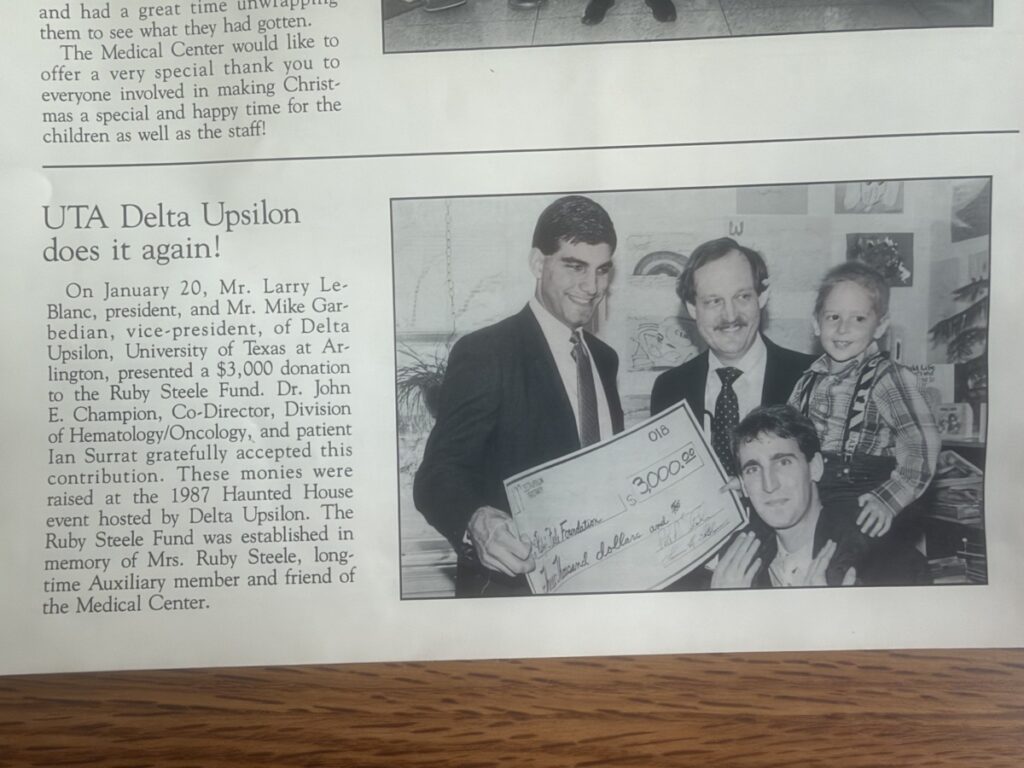
We donated the proceeds to cancer charities in Jimmy’s honor. My understanding is that we donated the funds to the American Cancer Society. At some point, we began directing those donations to the Ruby Steele Fund at Cook’s Children’s Hospital in Fort Worth. The Ruby Steele fund provided resources for families whose children were undergoing cancer treatment. I personally had the opportunity to hand deliver donation checks several times and meet some of the children. It made a big impression on our members.
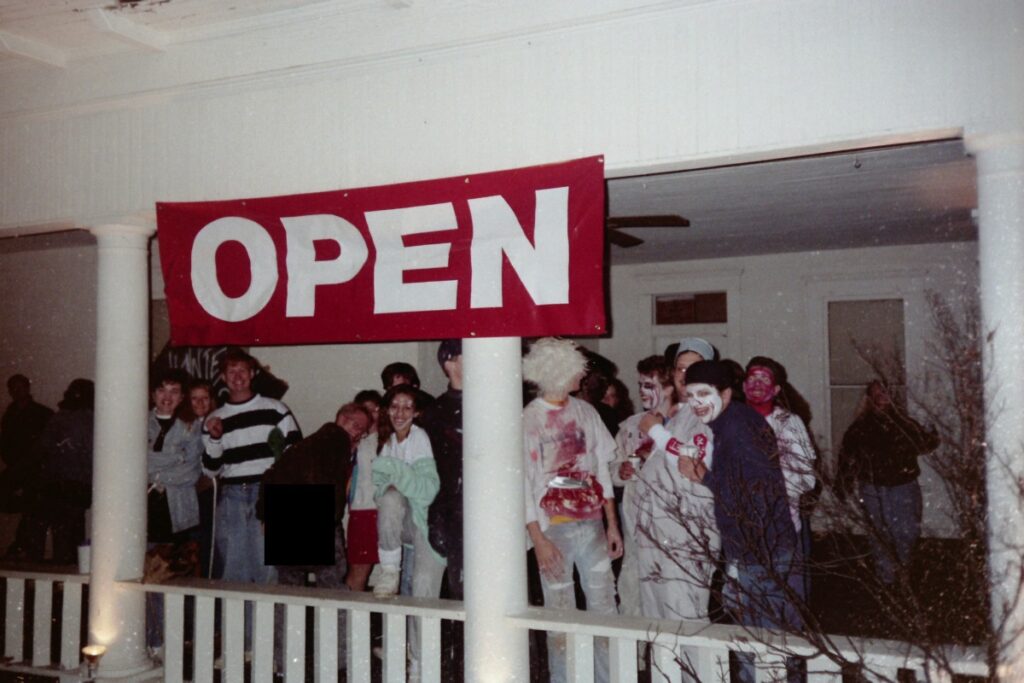
Much like the garage at 2066 Crist Drive, Los Altos, California where Apple was started, 719 W Abrams, Arlington, Texas was the epicenter of the modern-day Haunted House industry. Now, many who experienced this event, either as guests or volunteers, probably never appreciated the significance of what was being accomplished, especially some of the innovative elements that were created for the Haunted House industry. Let me extrapolate my hypothesis.
Keep in mind my knowledge is limited to the years I had first-hand experience, which is from 1985 to the early 90s. However, many of the aspects of what we were utilizing proceeded in those years. Below are some of our innovations.
Guides
We utilized guides to take our guests through the Haunted House. These typically were young ladies from other UTA sororities and/or students. We had one guide at the front and one at the rear. The guests were instructed to hold onto the rope as the guide in the front narrated the story (theme) and gave heads up to the men in the room they were about to enter.
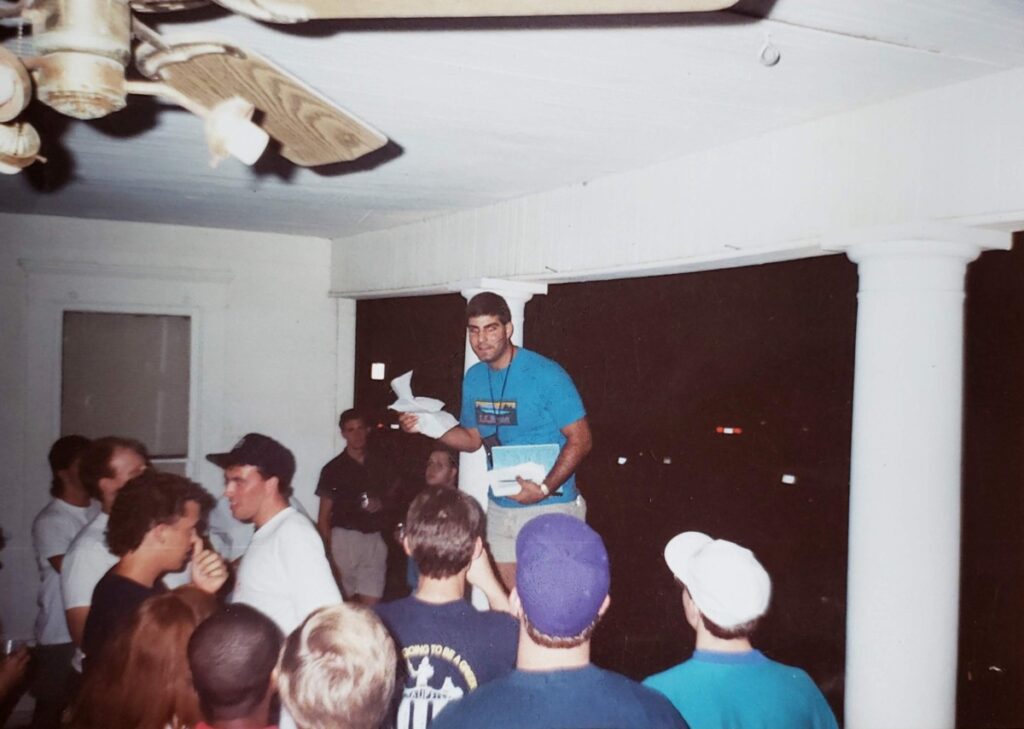
The guide in the rear made sure everyone progressed oftentimes having shoulder down and push the tour through while the guide at the front had to pull on the rope like she was an Olympic tug-of-war participant to pull the group through. We underestimated how hard these women worked.
Modular Construction
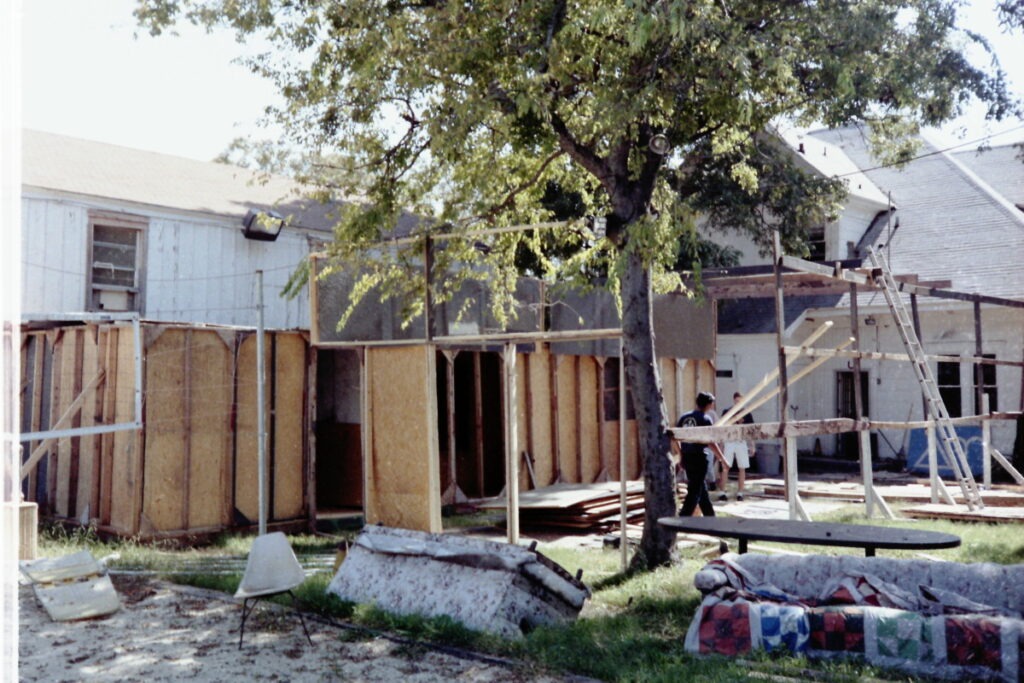
In 1985, Scott R. and his team developed a modular panel system (decades before modular housing) that allowed us to add thousands of square feet to the Haunted House in a weekend. This allowed the structure to get close to 10,000 square feet including the interior of the home, a secondary building on the property, and the modular assembly. We could assemble 5,000 or so of space in a single weekend.
Special Effects
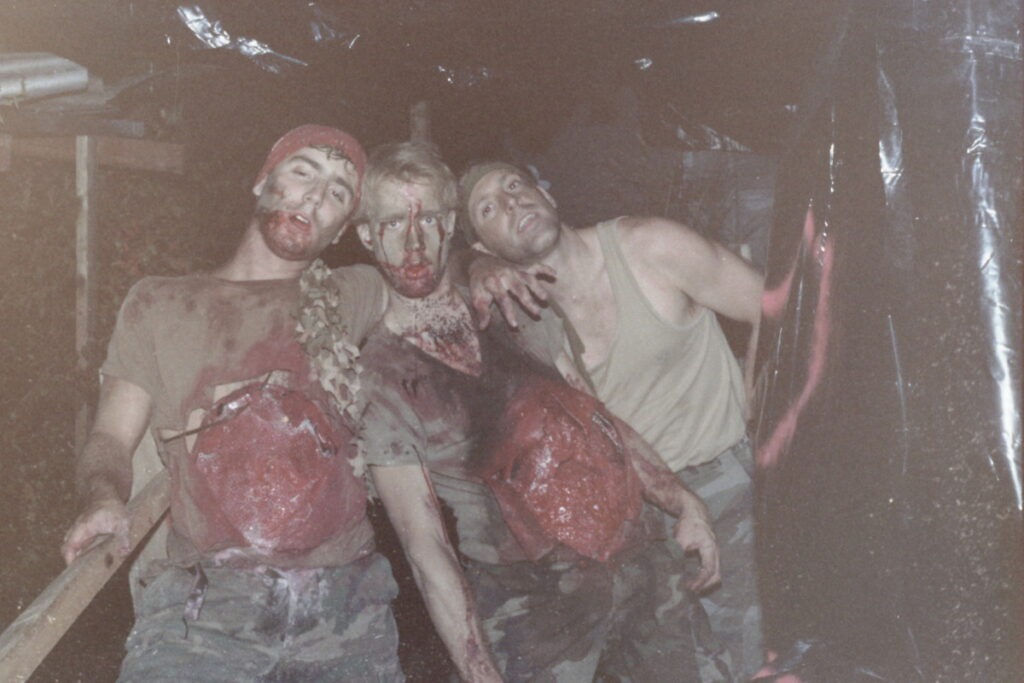
We developed crude special effects that were on par with what was being done in Hollywood. We manufactured our own “guts”, utilized fluorescent paints, black lights, strobes, fog machines, etc. These rooms were not just dark spaces where someone jumped out and yelled, “Boo!”; they were mini, Hollywood-type sets.
Themed Spaces
When we went modular with the structure, some of our ambitious brothers introduced ‘The Swamp’. They created a catwalk-type structure that guided our guests over a pool of water with an assortment of characters and elements that would scare them from all directions (including below). We had water elements, lighting, fog, etc. This was about the time we learned the importance of ground wires with electrical elements.
Lighting & Sound
We incorporated elements from our dance floor to distract and scare our guests. Massive speakers, strobe lights, remote controlled lighting elements, etc. Guests would walk into a room that was often pitch black and relatively quiet only to be hit with a wall of sound at incredible decibel levels and a frenzy of strobes while the characters did their thing.
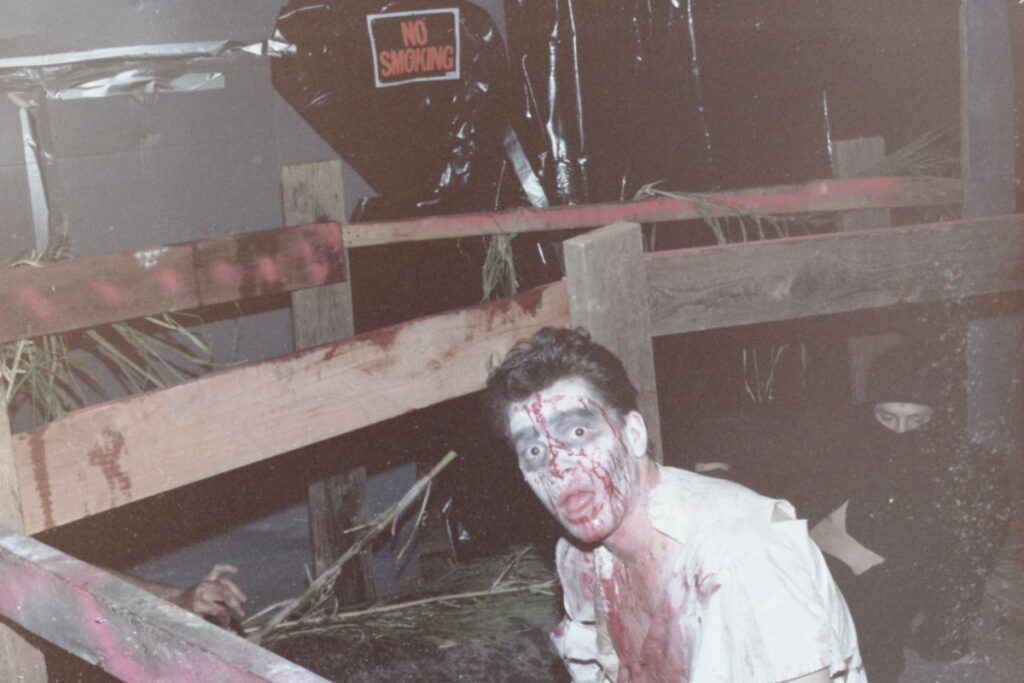
We would turn the base up so high, you could feel your innards vibrating. If you wonder why Gen X has hearing damage, we might have had something to do with that…
Physical Contact
Back then we could grab folks (arms, shoulders, legs, feet) which scared the bejesus out of them. Sometimes, they would get squirted with slime or water. This, in connection with the lights, sounds and screams from adjacent rooms, provided an intense experience for the guests.
Theatrical Performances
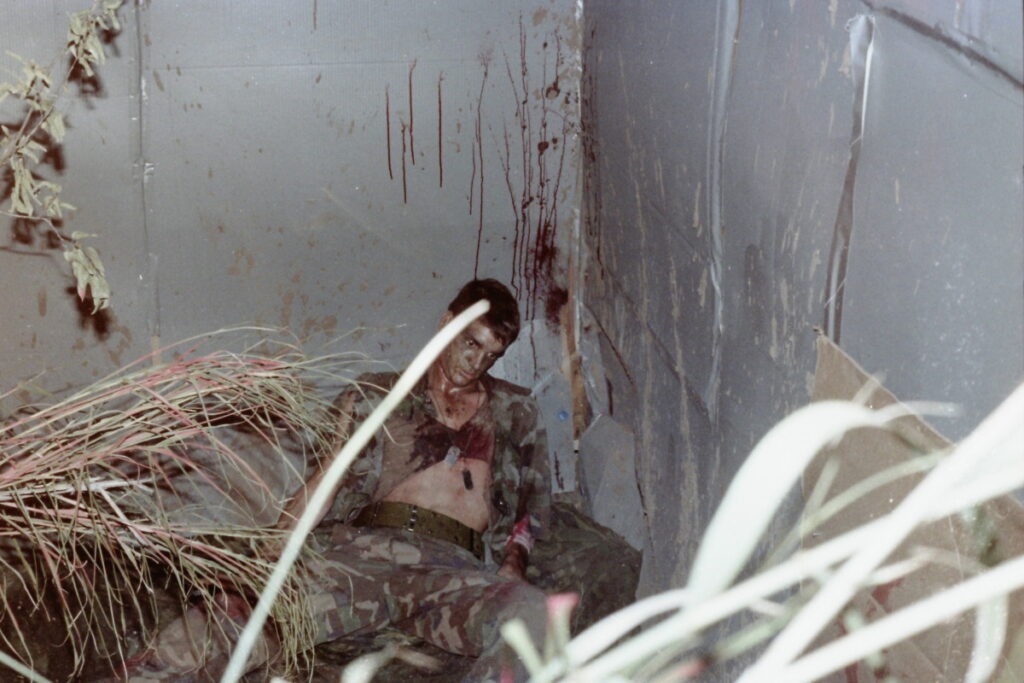
In most cases, each room was set up as a mini performance that reset for every group. The guide would enter one group into the space and a performance (for lack of better term) would occur. Upon completion, the guides would literally drag folks out of the room, so it could reset for the next group.
Attack Sequences
Often when you enter a haunted house, you go into a dark space and something goes, “BOO!”. Not in our Haunted House. We developed multiple sequences such as; Distract Attack, Distract Distract Attack, Distract Attack Distract Attack, Attack Distract Attack, etc. To the layman, it would just seem like crazy screaming college men. The reality is, there were formulas on how to get the maximum fright factor for each group.
Structure Design
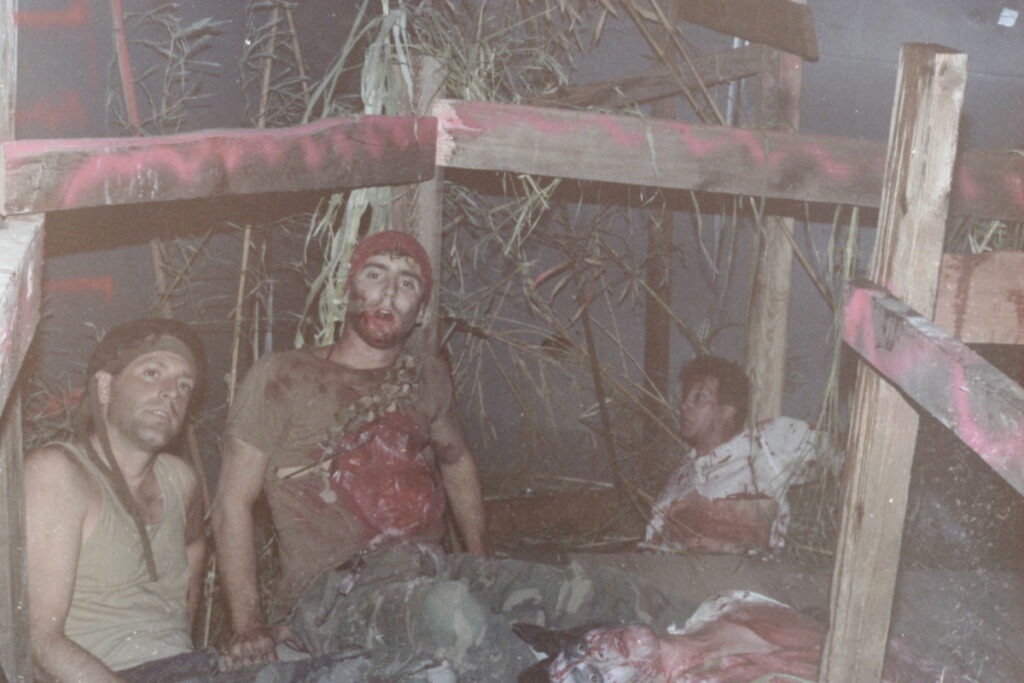
We often had guests break free and try to run out or smash into the walls. We quickly adopted ways to reinforce structures, so we knew where our guests may retreat to minimize damage and potential injuries. We also wanted to keep the line moving.
Code Blue
We quickly learned to develop security protocols to manage unruly guests or threats to our guides and characters. We took the safety of our team seriously, and for those who thought it was just a bunch of kids with too much time on their hands, they were set straight.
Power Tools
Years before the Texas Chainsaw Massacre came out (1974), we were using an assortment of power tools to add terror to the tours. Chainsaws, power saws, drills, sledgehammers, smashing on metal plates, air compressors, water hoses, etc. One year, in the famous Alf Room (yes that Alf), we had a Mustang parked inside, so that when our guests cleared what they thought was the final element to leave the Haunted House, we revved the engine, hit the high beams and laid on the horn. No worries, the exhaust pipe was outside in the open air. Oh, and eventually we figured out that taking the chains of the chain saw was a good idea…
Merchandise
We sold T-shirts, many of which I still own (can’t fit in them) and from our understanding, we were one of the first to utilize glow-in-the-dark elements on our shirts in the late ‘80s.
Crowd Interaction
We had our characters constantly engaging the crowd often in a ‘surprise’ format. We chased people for blocks using chain saws, and we would sneak up on guests in line from behind and they would literally collapse in fear. The years I was active, we would put thousands through Haunted House and sometimes, the line would go back 100 yards.
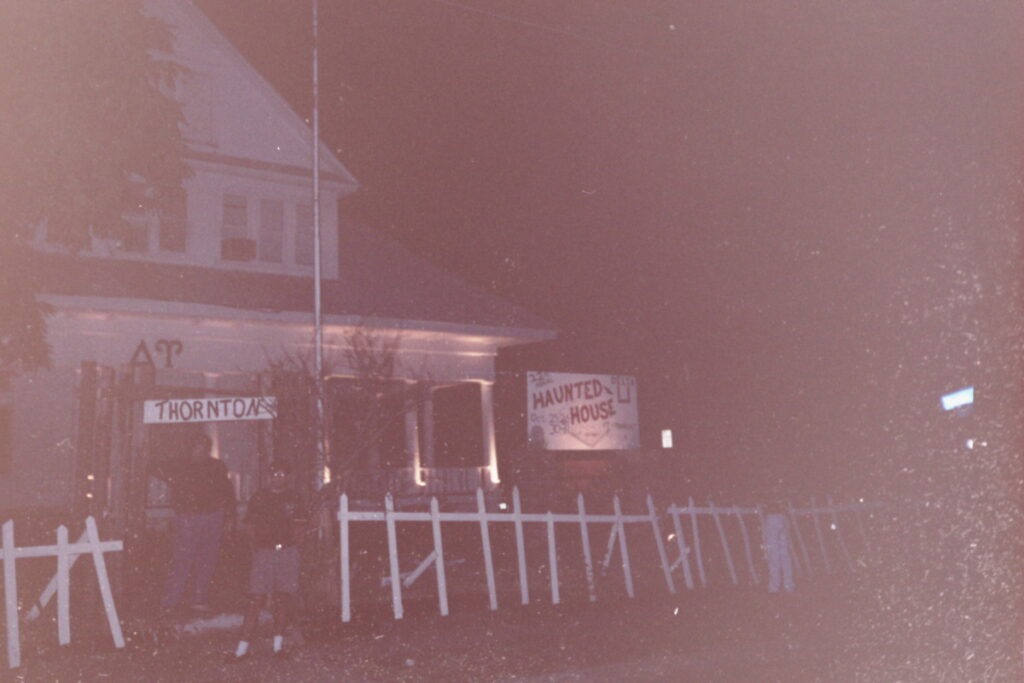
It was not uncommon for guests to wait in line for hours. We instinctively knew we had to keep them entertained.
City Permitting
For years, we pretty much did our thing but as the crowds grew, the City of Arlington developed protocols with which other cities eventually developed including marking exits, treating flammable surfaces with fire retardant, closing off roads, electrical inspections, etc.
Promotion
Back then, there was no social media, cell phones, or email. We had to be creative in getting the word out. We bootstrapped it with presentations to campus groups, flyers, sending in PSAs to radio stations, flyers, verbally spreading the word, flyers, the occasional public access cable TV show, flyers, a big sign in front of our house… We forgot to mention we used a lot of flyers. One year, we partnered with a local radio station that came out to do an onsite story from the property. Another year, we had some Dallas Cowboy Cheerleaders show up in uniform. Getting people to an event (party, show, haunted house, etc.) was hard back then.
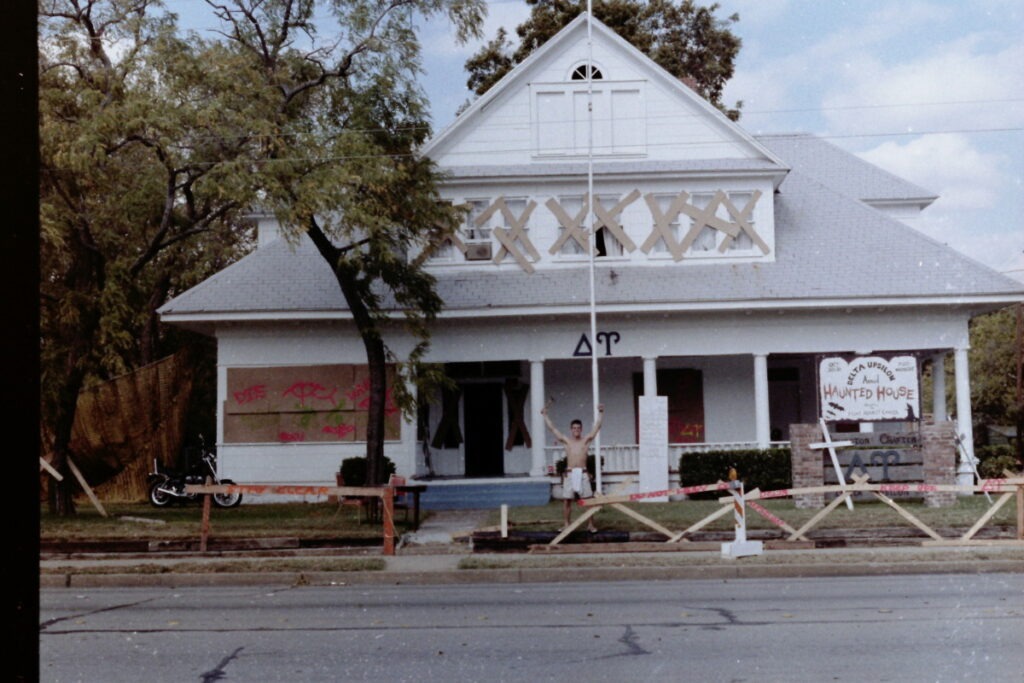
In the end, we scared people who then told their friends, and for some reason, they kept coming back for more. It was not uncommon to have adults who went to UTA in the 70s to show up with their kids in the 80s or 90s and wait hours to tour the Haunted House.
We took extreme pride in scaring folks, and I mean SCARING them.
Numerous times, we had folks break down and drop. We had to stop everything and often carry them out. Seeing grown men and women crying from fear was validation they were getting their money’s worth. One big merchandising opportunity we missed was selling underwear. Pretty sure we could have raised a lot more if we had a Fruit of the Loom booth.
What’s the Big Deal?
At this point folks may be saying, “Big deal. This is all common-sense stuff we see all the time.” Please remember this was back in the 70s & 80s; no one was doing this, and it was even more remarkable because we had no sponsors, no money and certainly very little “professional” training.
In Honor of Our Late Brother
Over the years, we donated tens of thousands of dollars in Jimmy Turner’s name to help families whose children had cancer. Jimmy’s death gave us the opportunity to help so many more, and it helped hundreds of young men and women understand at a young age the importance of giving back to their community.
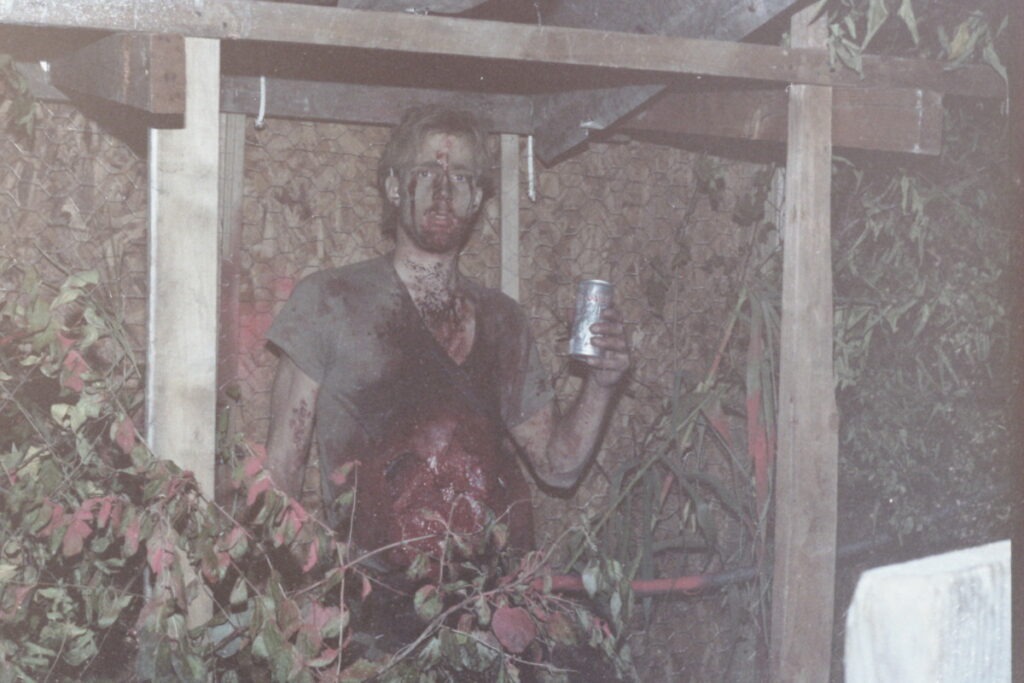
Now I would be lying if I didn’t say it got crazy. After all, you had college men and women who refreshed themselves with adult beverages, and we were often sleep deprived. And yes, grades did suffer a bit. However, we had a lot of fun entertaining tens of thousands of our friends and neighbors.
Career Training
I had the honor of being chairman of this event three times. Arguably, this was the nexus of my passion for event management and construction. Of course, at the time it was just a fun way to scare people and help out children with cancer, so I wasn’t really thinking of career training.
The Modern Haunted House
I am quite proud that for all these years and craziness, I am not aware of any serious injuries to our guests and workers. This is a testament to our brothers having fun AND watching out for everyone’s well-being. I have attached some pictures that I have (no iPhones back them) and encourage others who have pictures to share as well.
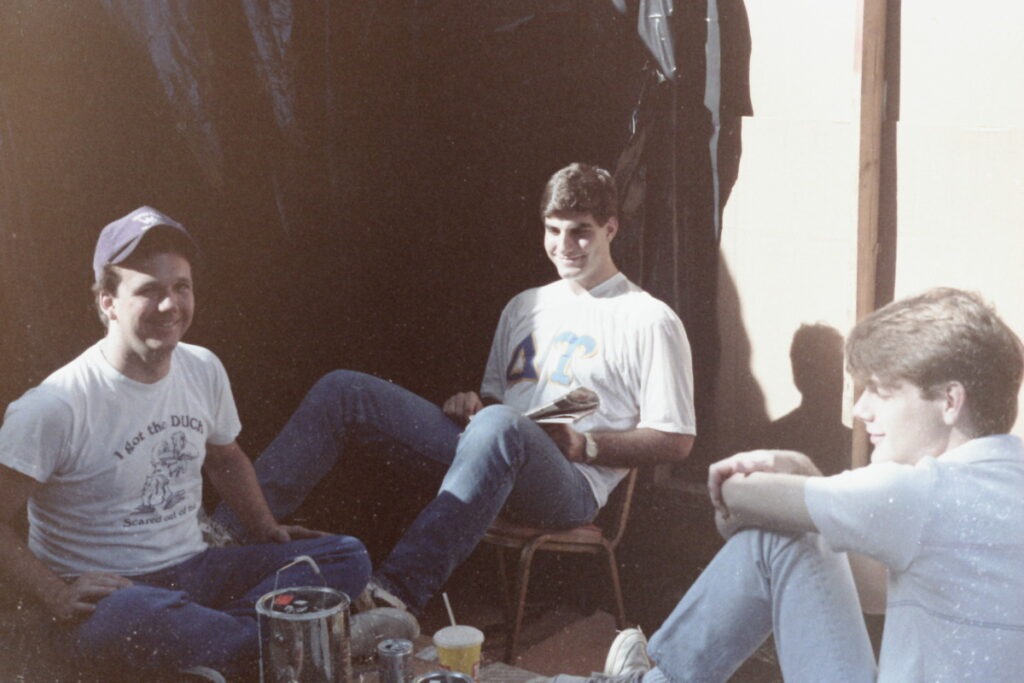
So, the next time you attend a Haunted Attraction or Haunted House, please remember Jimmy Turner and the fine men of Delta Upsilon in Arlington, Texas. At some point I will write on the importance of Greek Organizations. We often hear about all the bad stories related to Fraternities and Sororities that today, I wanted to share a good story.