
If you have ever ordered a Diet Coke instead of a regular Coke at a catered event, you already understand more about custom home construction than you think. Mike Garabedian sat down with host Cassidy on the latest episode of Uniqueness… “Built-In” to explain why change orders, those seemingly small requests to tweak something mid-build, carry a price tag that does not always match what our Owners expect.
What Is a Change Order, Exactly?
A change order is any alteration to the specifications an Owner originally signed off on in the contract. Mike put it:
“A change orders would say, oh, I want to move that or I want to change that. I want to add something.”
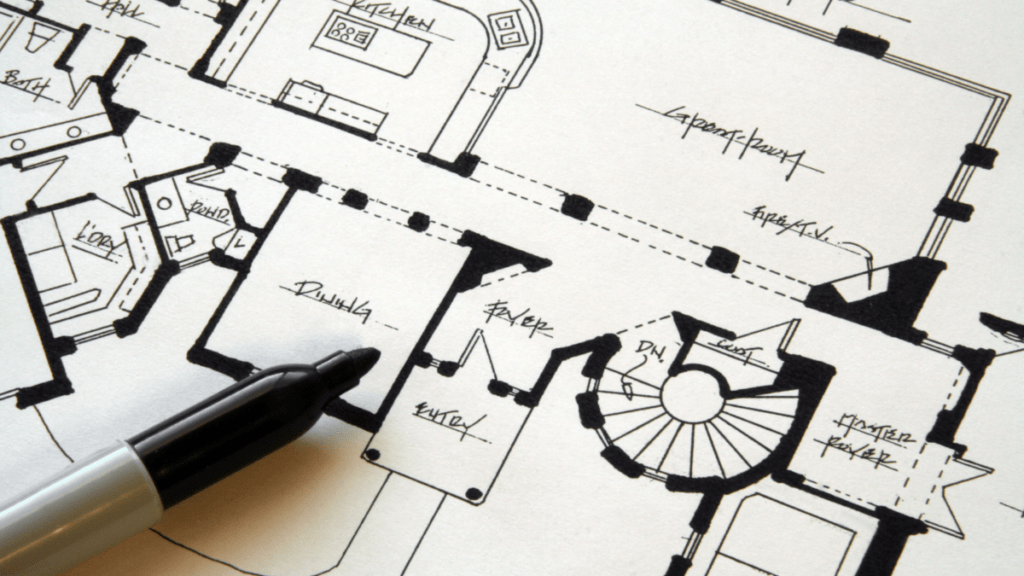
A switch, a cabinet, a door, a chimney. If it deviates from the plan already in motion, it qualifies.
The Coke and Diet Coke Dilemma
Here is the part that surprises most Owners: two products can cost the same amount and the swap still is not free. Mike’s example involves a catered event stocked with regular Coke, only for someone to request Diet Coke once the party has already started.
“The Coke and the Diet Coke cost about the same amount of money at the store,” Mike said, “but to swap out the drinks, you have to pack up all the coke, return them, or put them somewhere else. You have to send somebody to go get the Diet Coke.”
Multiply that logistics problem across framing, plumbing, and electrical, and the picture becomes clear. A change order is never just the price difference between two items. It is the labor, scheduling, and paperwork required to make the swap happen.
Two Kinds of Change Orders: Necessity and Request
Not every change order stems from a change of heart. Mike separates them into two categories. A change order of necessity covers something unforeseen that must be resolved for the project to move forward at all, such as unearthing a buried pile of trash on a lot or discovering, through soil testing, that a foundation design requires engineering changes. A change order by request is the opposite: swapping marble for quartz, adding a row of cabinets, or converting flooring from carpet to wood. Both carry cost, but only one is optional.
What a Change Order Pays For
Owners often assume the cost difference is the whole bill. It is not. Garabedian Properties accounts for the price of the new element, any credit available for returning the old one, and the administrative work behind the scenes: ordering the new product, confirming finishes, arranging shipping, receiving it on-site, and processing the return of whatever it is replacing. Then there is the labor.

“There’s the mechanics of having to have the plumber come back to switch it out and put it in the faucet, so he has to make an extra trip to do that,” Mike said. Every extra trip has a cost, even when nobody sees it happen.
Design Decision or Change Order? Timing Is Everything
Choosing cabinet finishes before production begins is a design decision, already built into the process. Requesting stain grade instead of paint grade after the cabinets are built, or installed, turns that same request into a change order. The line between “still deciding” and “changing your mind” is drawn at production, and it determines whether an adjustment is a modest line item or a full-blown change order.
Blame HGTV, Not Indecision
Ask Mike why change orders happen, and he does not point to indecisive Owners. He points to television, magazines, and Pinterest boards full of ideas nobody had when the project started. “It’s not necessarily indecision,” Mike explained. “It’s finding things that you want to do.” Because a custom home takes far longer to build than the average home renovation binge-watch, Owners have plenty of time to discover new inspiration mid-project, whether or not that inspiration fits the original plan.
This works in reverse too. Sometimes an element that looked great on paper does not survive contact with reality. Mike recalled the first house he ever helped build, decades ago, working under the builder who taught him the trade. The Owners picked the paint color themselves. Once it went up on the walls, they walked in and said, according to Mike, “oh, God, too yellow.” The whole house got repainted. Their own selection, their own regret, and their own change order, twice over.
The Porterhouse Rule

Mike compares this to ordering a steak. “You order a porterhouse and you normally place an order porterhouse and you, you normally place an order porterhouse and you, it looks great. It’s exactly what you ordered, cooked just the way you want it. You take a bite of it, said, no, I don’t like that.” Nothing was wrong with the steak. The Owner simply wanted something else after experiencing it. Home features work the same way. A detail that reads beautifully on a mood board can feel entirely different once it exists in three dimensions in your actual house.
Change Orders Can Strike at Any Stage, Including at the End of Home Building
There is no safe zone in the calendar. Mike has torn out marble bathroom floors on homes that were otherwise finished. He also shared what may be the most Gen X anecdote in Garabedian Properties history: building a model home for the Kaleidoscope of Homes tour roughly 25 years ago, Mike discovered, two weeks before 34,000 people were scheduled to walk through it, that the domed ceiling in the primary bedroom sat a full foot off-center from the fireplace. He had only ever viewed the room from the doorway. Lying in the actual bed one day and looking up changed everything. The ceiling had to be torn out and rebuilt in two weeks flat.
“That was I considered a change or necessity,” Mike said, “because I’m OCD.”
It is also, by his own account, the moment he thought he was having a heart attack on the job, only to be told later it was heartburn. Somewhere, a Blockbuster late fee is jealous of how much drama a domed ceiling can cause.
The Shower Niche That Is Never Just a Hole in the Wall

Small requests can trigger outsized work. Adding a shower niche after sheetrock is up sounds simple until you consider what is behind that wall. Garabedian Properties has to reframe the space, relocate vent stacks and electrical, and coordinate with a tile crew to source matching niche material. “It’s not just cut a hole in the wall, throw one in,” Mike said. Caught early, at the framing stage, this same request costs almost nothing. Caught late, it is a demolition project wearing a small disguise.
Lead Times Have Changed the Whole Game
Mike remembers when suppliers stocked everything locally, and Owners could walk in and pick up what they wanted the same day. That era is over. With the sheer number of SKUs on the market today, no supplier can warehouse it all. In-stock items typically take two to four weeks to arrive. Backordered or discontinued items can take six to ten weeks. When a decision changes near installation, that lead time can stall the entire job, sometimes requiring an intermediate fixture just to pass inspection, followed by a second trip once the real item finally shows up. Two electrician visits, or two plumber visits, for one final result.
The Most Expensive Change Order Mike Has Ever Seen
This one belongs in a category of its own. Garabedian Properties had already designed a home for a family in Colleyville, purchased the lot, and set the foundation forms. Standing on-site, the Owner looked at the forms laid out against the size of the lot and realized the proportions were wrong. The house was too large for the space. The project stopped on the spot. What followed was six months of negotiating to purchase the neighboring lot, discovering a water line running directly through the new footprint, and relocating it. Total delay: six to nine months, on top of the cost of the additional land and utility work. “That was probably the biggest one ever had,” Mike said. The Owner was thrilled with the final result. The wait to get there was not for the faint of heart.
Structural and Mechanical Changes Set Off a Domino Effect

Adding square footage after the fact, say, converting an attic into livable space, does not just mean framing and drywall. The HVAC system was sized for the home’s original footprint and cannot simply absorb more square feet. Adding a wall of windows changes the heat and cooling load on the entire house, which can require a different air conditioning system entirely. Larger homes may need an upsized generator, an additional electrical service panel, or another water heater. One request, several downstream systems, each with its own cost.
One Late Decision Can Stall an Entire Trade Lineup
Near the trim stage, adding a batch of new light fixtures sounds harmless. But the electrician now needs time that is not in the schedule, so he pulls off the job to work elsewhere and has to return later. Until he finishes, the appliance installer cannot proceed, the hardware crew cannot finish, the painters and flooring crew are stuck behind them. Mike compares it to standing in a Costco checkout line, only to run back for one more item.
“That 30 minute trip at Costco turns into an hour,” he said, “because you have to go back… every time you get out of line, you go back and get something else. It adds more time.”
And, naturally, your cart total climbs the longer you keep wandering back into the aisles.
Undoing Finished Work Costs More Than Doing It Right the First Time
Plumbers are paid per fixture installed. If an Owner changes their mind after installation, the plumber has to return, remove the original fixture, and install the replacement, effectively getting paid twice for one spot in the house. Worse, once a fixture has been installed, or even opened, it typically cannot be returned. That original fixture becomes a sunk cost, not a future discount.
Enhancement or Change Order? There Is a Difference
Not every addition is a change order. An enhancement is something pre-planned and added cleanly into the process, like swapping a wall switch for an air switch on a garbage disposal before the wiring is set. Minimal disruption, minimal cost. The same shower niche mentioned earlier is an enhancement if it is caught at framing. It becomes a change order the moment it requires undoing something already built.
How Owners Can Get Ahead of Change Orders
Experienced builders are always listening for what Mike calls triggers, offhand comments like “I love skylights,” that hint at a future request before it becomes an expensive one. Owners can help by bringing a pros and cons list to design meetings: features they love, features they do not, and inspiration they have collected along the way. The earlier those preferences surface, the easier they are to build into the plan instead of bolting on later.
A Realistic Budget Prevents Change Orders Later
Mike compares mismatched budgets to shopping for a handbag. Someone fresh out of college is not walking into a boutique for a $15,000 bag. The same logic applies to appliance packages and lighting allowances. A builder quoting a $4,000 lighting allowance on a million-dollar home is not saving anyone money. That number simply gets made up later through change orders. A builder quoting a realistic $15,000 lighting allowance up front means fewer surprises, and fewer add-ons scrambling to catch up with reality.
Being Intentional Instead of Reactive
Mike is candid that visiting the job site constantly does not help. “The more you look at the menu,” he said, “the more you’re going to see stuff on the menu you want to eat.” Owners are better served staying focused on what genuinely matters to their family rather than chasing every new idea a site visit or a magazine spread might spark. As Mike put it, no matter the budget, whether one million dollars or fifty, nobody gets everything. The goal is picking the handful of elements that matter most and letting the rest go. “It’s not the stuff you put in the house that makes it a home,” he said. “It’s your family, the memories, and the enjoyment you have in the house.”
Ready to Build With a Team That Plans Ahead of Change Orders?
Change orders are not a sign that something went wrong. They are a normal part of custom home building, and the Owners who fare best are the ones who understand the cost behind them before they happen. If you are planning a custom home in Southlake, Westlake, Colleyville, Keller, or anywhere else in North Texas, our team at Garabedian Properties will walk you through every decision point ahead of time, not after the walls are already up. Reach out at 817.748.2669 or Info@GarabedianProperties.com to start the conversation.